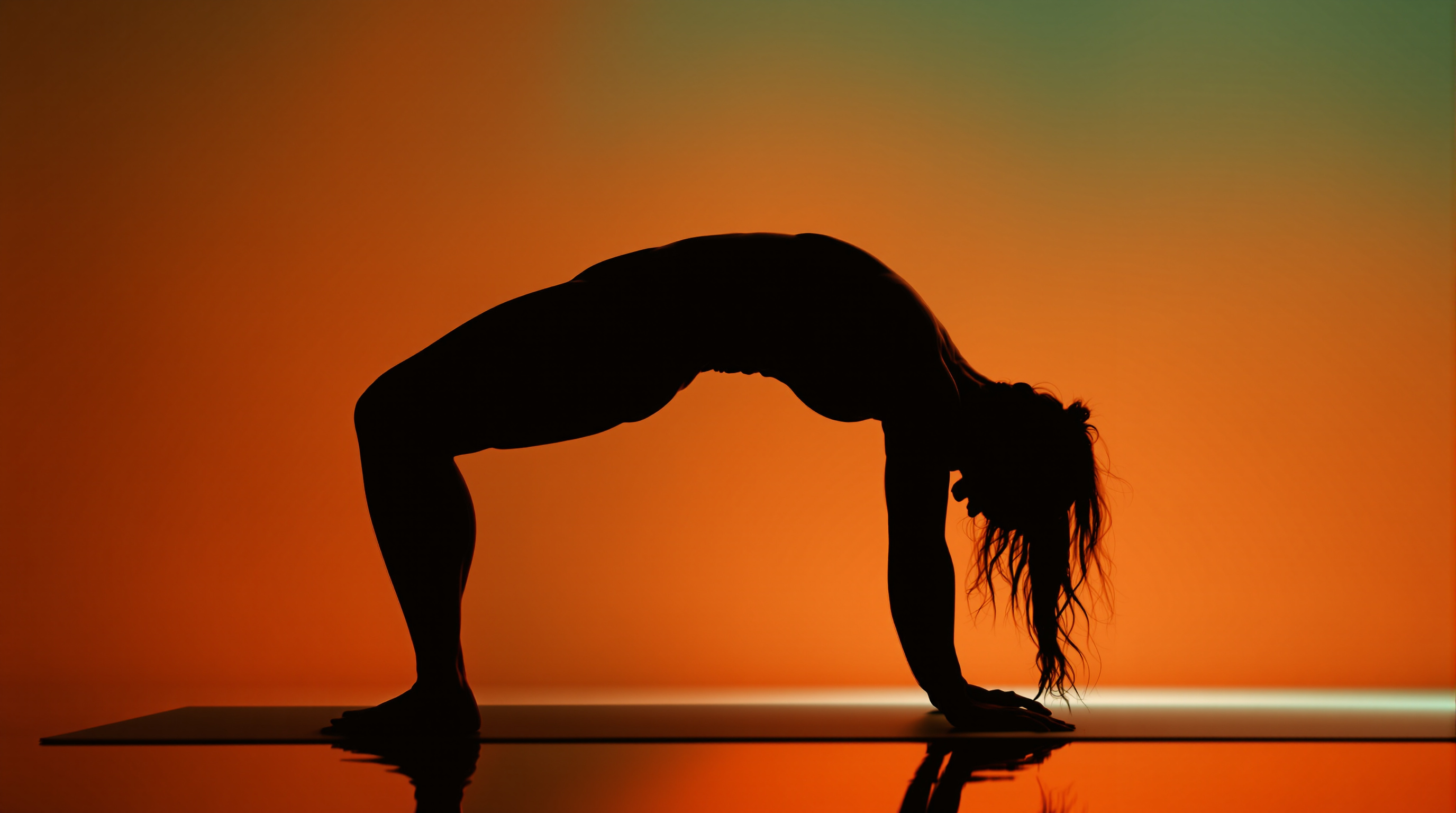
The 26 Postures
A complete guide to the traditional hot yoga sequence.
A complete guide to the traditional hot yoga sequence.
The traditional hot yoga sequence consists of 26 postures and 2 breathing exercises, carefully designed to systematically work every part of your body. This fixed sequence, practiced in a heated room, allows students to track their progress over time while ensuring comprehensive physical development.
Understanding each posture's purpose and benefits deepens your practice and helps you approach each class with intention. Below is an overview of the complete sequence.
The class begins with standing deep breathing to oxygenate the blood, activate the respiratory system, and prepare the mind for practice. This pranayama exercise expands lung capacity and establishes the breath awareness essential for the practice ahead.
This combined posture warms up the spine through lateral stretching and forward bending. Benefits include strengthening the abdominal muscles, improving flexibility of the spine, and promoting kidney and liver function.
A three-part posture that strengthens the legs, particularly the quadriceps, while improving balance and ankle flexibility. This challenging pose builds mental determination and lower body strength.
A balancing posture that opens the 14 largest joints in the body, improves balance, and strengthens the legs. Eagle pose also increases blood flow to the reproductive system and kidneys.
One of the most challenging balancing postures, developing concentration, patience, and determination while strengthening all the muscles of the standing leg.
A beautiful balancing backbend that improves cardiovascular function, increases circulation, and develops concentration and balance.
A full-body stretch that increases blood flow to the heart and brain while strengthening cardiovascular health and improving posture.
A deep forward fold that stretches the sciatic nerve and tendons of the legs while massaging internal organs.
A comprehensive posture affecting every muscle, joint, tendon, and organ of the body. Triangle improves cardiovascular health and is particularly beneficial for the digestive system.
Compresses and massages the thyroid gland while stretching the legs and back. Benefits metabolism and the immune system.
A balancing posture that strengthens the ankle, knee, and hip joints while improving posture and balance.
An advanced balancing posture that develops psychological and mental powers while strengthening knees and ankles.

A crucial resting posture that allows the body to absorb the benefits of the standing series while normalizing circulation and promoting relaxation. According to the Harvard Health Blog, relaxation postures like Savasana activate the body's natural relaxation response.
Massages the ascending, descending, and transverse colon while improving flexibility of the hip joints.
A transitional movement that strengthens the core while maintaining heat in the body.
Strengthens the spine and relieves back pain while improving digestion and reproductive function.
Strengthens the upper spine and improves the function of the liver and spleen while firming the buttocks and hips.
The most cardiovascularly challenging posture, strengthening the middle spine and expanding lung capacity.
Works the entire spine while improving circulation, digestion, and the function of internal organs.
Stretches the quadriceps and ankles while strengthening the lower spine and improving flexibility of the lower back, hips, and knees.
Provides maximum relaxation, stretches the spine, and increases blood flow to the brain. Excellent for sleep disorders and stress relief.
A deep backbend that stretches the entire front of the body while compressing the spine and stimulating the nervous system.
The counter-pose to Camel, providing maximum stretch of the spine and improving its mobility and elasticity.
A combination posture that stretches the sciatic nerve and improves flexibility of the last five vertebrae.
The only posture that twists the spine, improving elasticity and maintaining spinal health. Benefits the central nervous system and digestive organs.
The class concludes with this breathing exercise that strengthens the abdominal muscles, increases oxygen levels, and provides energizing benefits that carry into your day.
The ordering of the 26 postures is deliberate, not arbitrary. The sequence begins with standing postures that build heat and engage the largest muscle groups, then transitions to the floor series where deeper stretches and spinal work become possible with a thoroughly warmed body. Each posture prepares the body for the one that follows, creating a cumulative effect that would not be achieved by practicing the poses in a different order. This systematic approach is one of the key reasons the traditional series remains effective across decades of practice and why instructors are trained to preserve the sequence precisely as designed.
Ready to experience these postures? Check our class schedule or learn how to prepare for your first class.
Join us for a class and practice all 26 postures with expert guidance.
View Schedule